
Convenience at Your Doorstep: The Advantages of E-Waste Collection from Home
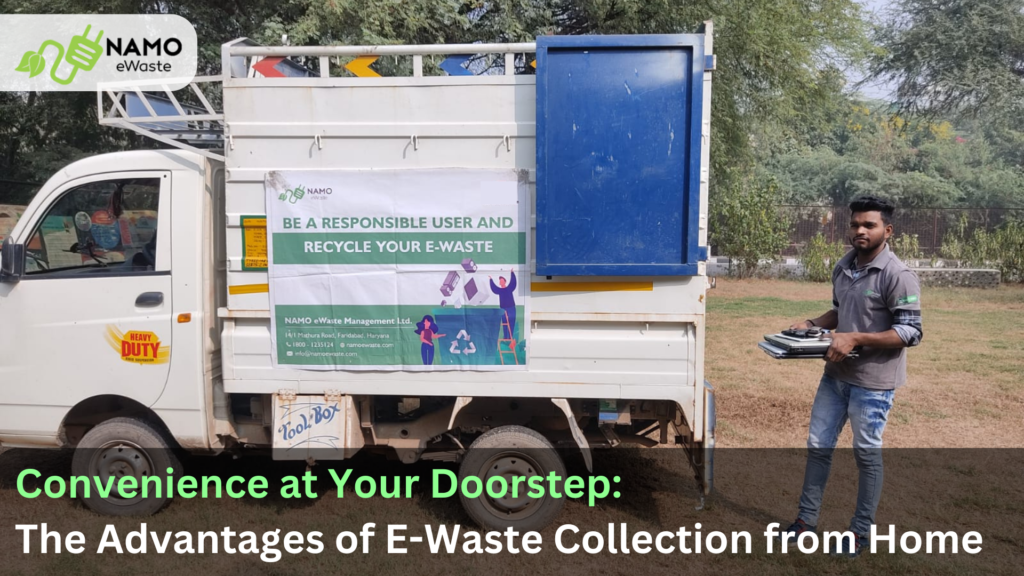
When a new phone hits the market, most of us are willing to buy it. And not just phones, we love to own tablets, PCs, laptops, and other e-devices that are launched with new & updated features. This consumer behaviour has no doubt benefited these manufacturing companies; but then, who is calculating the impact our environment is facing? Well, we did the research, and it says “Approximately 75% of electronic waste (e-waste) in India is generated by government, public sector companies, and private sector companies, while individual households contribute only around 16%.” Source: Statistica This staggering statistic underscores the urgent need for effective e-waste management practices across the country. We believe that proper recycling of e-waste in India is not just a choice but a necessity for India’s sustainable future. Namo’s Vision: Namo is dedicated to leveraging the expertise, resources, and experience to foster a sustainable future for our planet Earth. They have recognized that e-waste management is one of the most critical challenges India is facing at the moment. With access to 70% of India’s e-waste, they have strategically positioned themselves to make a meaningful impact in this area. Their commitment extends beyond mere awareness and is actively working towards tangible solutions to address the growing e-waste crisis. Our Procedure: Collection and Transportation: Our comprehensive process begins with the collection of e-waste from your doorstep. Our facilitators ensure the safe transportation of e-waste to our R2-certified facilities. Our fleet of vehicles, in collaboration with our channel partners, facilitates efficient reverse logistics, guaranteeing the secure delivery of both hazardous and non-hazardous e-waste. Asset Refurbishment: Repairable items undergo asset refurbishment to bring them back to life. Damaged components are replaced with high-quality, cost-effective spares to enhance product longevity. Thorough ‘Quality Checks’ are conducted to ensure the efficiency, satisfaction, and safety of refurbished products. Standard and extended warranties are offered for these refurbished products. Recycling: Salvageable parts from non-repairable items are extracted for reuse in repairing other devices. The remaining portions are meticulously disassembled and categorized for environmentally friendly disposal. Conclusion: With the rapid pace of technological advancement, electronic devices have become an integral part of our daily lives. However, the disposal of these devices poses significant environmental and health risks if not managed properly. In the pursuit of a sustainable future, Namo is committed to leading the charge of e-waste management in India. By implementing innovative solutions and adhering to the highest standards of environmental responsibility, they are striving to realize our vision of a cleaner, greener tomorrow. Namo is dedicated to managing e-waste by enabling the service of e-waste collection from home. They are trying to put their best foot forward to protect our environment and communities. Someone has rightly said that charity begins from home- so, let’s work together toward a brighter and more sustainable future.
Environmental Advantages of Electronics Recycling
We all love our gadgets. From smartphones and laptops to tablets and gaming consoles, they connect us, entertain us, and fuel our modern lives. But what happens when these beloved devices reach the end of their lifespan? Unfortunately, many end up in landfills, creating a hidden danger we rarely consider: e-waste. E-waste, short for electronic waste, is the fastest-growing waste stream globally. This discarded tech harbours a dark secret: a cocktail of toxic materials like lead, mercury, and cadmium. When e-waste ends up in landfills, these toxins can leach into the soil and water, poisoning ecosystems and harming human health. But there’s a hero in this story: e-waste recycling By responsibly recycling e-waste, we can unlock a treasure trove of environmental benefits, and we’re here to guide you on this eco-friendly journey. The Power of E-waste Recycling Recycling e-waste isn’t just about decluttering your drawers; it’s about making a conscious choice for the planet. Here’s how it works: 1. Reduces reliance on virgin materials Mining for new metals and minerals used in electronics has a significant environmental impact. Recycling e-waste recovers valuable resources like gold, silver, and copper, reducing the need for further mining and its associated pollution. 2. Combats climate change Manufacturing new electronics requires immense energy. By recycling e-waste, we significantly reduce the energy needed for production, minimising greenhouse gas emissions and contributing to the fight against climate change. 3. Prevents air and water pollution Improperly disposed of e-waste can release harmful toxins into the air and water when they burn or decompose. E-waste recycling plants like Namo eWaste handle e-waste responsibly, preventing these dangerous pollutants from harming our environment and ourselves. 4. Conserves precious landfill space Landfills are overflowing and e-waste takes up valuable space that could be used for other purposes. Recycling e-waste diverts it from landfills, extending its lifespan and preserving precious land for future generations. 5. Creates green jobs The e-waste recycling industry generates employment opportunities in various sectors, from collection and processing to refurbishment and remanufacturing. By choosing e-waste recycling, you’re not just helping the environment; you’re supporting a sustainable economy. 6. Builds a Circular Economy E-waste recycling is more than just a waste management solution; it’s a cornerstone of a circular economy. By keeping resources in use and minimising waste, we create a more sustainable future for ourselves and generations to come. we’re committed to being a part of this positive change, and we invite you to join us on this journey. Make a difference Namo eWaste is committed to making e-waste recycling accessible and convenient for everyone. We offer a variety of services, including: Convenient e-waste collection from home or office No need to leave your comfort zone. We’ll pick up your e-waste at your doorstep, ensuring a hassle-free experience. Responsible and transparent processing We adhere to the highest environmental standards, ensuring your e-waste is recycled responsibly and ethically. Data security We understand the importance of protecting your data. We offer secure data destruction services to ensure your personal information is completely erased before recycling. Final Takeaways Recycling e-waste is not just a trend; it’s a necessity for a sustainable future. By choosing Namo eWaste as your partner, you’ll be making a conscious choice to protect our planet and its resources. Let’s join hands and turn our e-waste into a force for good. Take action today! Visit our website to learn more about our e-waste recycling services and schedule a convenient pickup. Remember, every recycled device is a step towards a cleaner, greener future. Together, we can make a difference!
Leveraging EPR for Brand Advantages
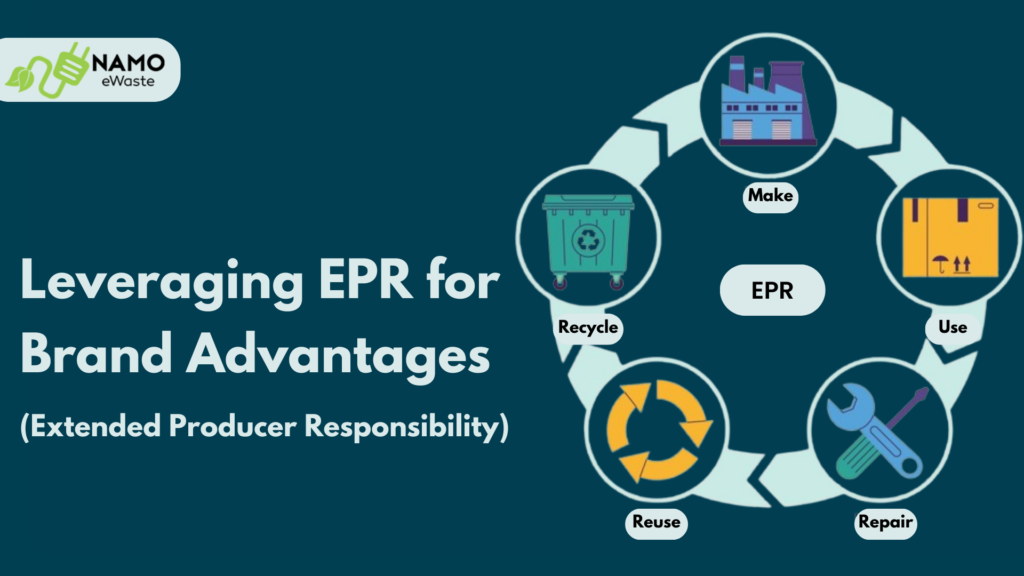
In today’s environmentally conscious world, consumers are increasingly looking for brands that align with their values. One way for businesses to demonstrate their commitment to sustainability is by taking responsibility for their products’ end-of-life management through Extended Producer Responsibility (EPR). What is EPR and Why is it Important? EPR is a policy that makes manufacturers financially and physically responsible for the collection and recycling of their products at the end of their useful life. This includes electronic waste, or e-waste, which is one of the fastest-growing waste streams in India. Why Should Your Brand Care About EPR? There are many benefits to complying with EPR, both for the environment and your brand. Here are a few. Adopting EPR-supportive actions: Boosts your brand image Consumers are more likely to trust and support brands that are seen as environmentally responsible. By complying with EPR, you can show your commitment to sustainability and differentiate yourself from your competitors. Reduces costs By collecting and recycling your products, you can save money on waste disposal costs. You can also sell valuable materials recovered from e-waste, such as metals. Improves compliance EPR is becoming increasingly mandatory in India and around the world. By complying early, you can avoid potential fines and penalties. Contributes to a circular economy As a brand, when you opt for recycling e-waste, you can help create a circular economy where resources are kept in use for as long as possible. This reduces the need for virgin materials and helps conserve the environment. How Can Namo eWaste Help You Comply with EPR? Namo eWaste is a leading e-waste management company in India. We offer a comprehensive range of services to help businesses comply with EPR regulations, including: E-waste collection: We provide convenient and secure e-waste collection services for businesses of all sizes. We can collect e-waste from your doorstep or set up collection points at your facilities. E-waste recycling: We have state-of-the-art e-waste recycling plants where we process e-waste responsibly and sustainably. We extract valuable materials from e-waste, such as metals and plastics, which are then recycled into new products. Compliance support: We can help you understand and comply with EPR regulations. We can also provide you with reports and documentation to demonstrate your compliance. By partnering with Namo eWaste, you can leverage EPR to gain a competitive advantage, improve your brand image, and contribute to a more sustainable future. Here are Some Ways We Can Help You: Reduce your e-waste footprint: We can help you track and reduce the amount of e-waste you generate. Increase your recycling rates: We can help you recycle more of your e-waste and divert it from landfills. Recover valuable materials: We can help you extract valuable materials from your e-waste, which can be used to make new products. Comply with regulations: We can help you understand and comply with government EPR regulations. Namo eWaste is committed to helping businesses achieve their sustainability goals. In addition to the benefits mentioned above, complying with EPR can also help your brand: Build stronger relationships with your customers – Consumers are increasingly loyal to brands that share their values. By complying with EPR, you can show your customers that you care about the environment and that you are committed to doing your part. Attract and retain top talent – Employees are also looking for companies that are committed to sustainability. By complying with EPR, you can make your company a more attractive place to work. The Way Forward EPR indicates a new era of environmental accountability across the e-waste ecosystem. It pushes brands to not just design better products but also take ownership of their end-of-life impact. Brands that lead this culture change through partnerships with compliant service providers will reap outsized rewards in both market success and public esteem as sustainability pioneers. Become a sustainability torchbearer while optimizing business value – partner with Namo eWaste for your EPR needs. Namo eWaste is a one-stop shop for all your e-waste management needs. We have the expertise and experience to help you comply with EPR regulations and achieve your sustainability goals. Contact us today to learn more about how we can help you
Inefficient Segregation: The Main Obstacle To Effective eWaste Recycling

eWaste or electronic waste refers to discarded electrical or electronic devices. With the rise in consumption and shorter lifespan of gadgets, eWaste generation has increased rapidly. With components like lead, mercury, cadmium etc., eWaste can be highly toxic and have a devastating impact on health and the environment if not disposed of properly. Efficient eWaste recycling involves the extraction of all reusable components and the safe disposal of hazardous materials. However, one of the main obstacles to effective eWaste recycling is inefficient segregation. What is Inefficient Segregation of eWaste? Segregation refers to the systematic separation of various elements in eWaste for easier processing and enhanced value extraction. When segregation is not done properly, different components get mixed making recycling complicated. In India, a large chunk of eWaste ends up in informal sectors. Here, unscientific methods are used for extraction which leads to hazardous byproduct generation. Components like batteries and circuits get dismantled together causing contamination. Such mixing poses the following risks: Safety Hazards: Incompatible materials when stored together can result in chemical reactions or explosions. For example, discarded lithium batteries can react with other junk and cause fire breakouts. Difficulty in Processing: When various elements like plastic, glass, and metals get mixed, separating them requires more complex techniques, manpower and infrastructure. Many companies avoid such eWaste batches. Loss of Recoverable Elements: Mixing makes extraction of reusable metals like gold, silver etc. unviable. It also leads to damage and corrosion of such recoverable elements. Environmental Contamination: Informal processing of complex unsorted eWaste gives rise to byproducts like dioxins which contaminate air, water and soil. Effective Segregation: The First Step for eWaste Recycling Companies With the rising relevance and economic potential of the eWaste recycling sector, systematic segregation is the need of the hour. Namo eWaste ensures complete segregation by: Separating devices into categories: We segregate devices into categories like large appliances, small appliances, and IT accessories and communicate classification protocols across collection centres. Dismantling with precision: Our trained technicians carefully dismantle devices and separate components like circuits, batteries, metals etc. Appropriate storage: Different elements are stored distinctly in labelled containers to avoid contamination. Such streamlined segregation facilitates smooth functioning in our subsequent recycling process. Namo eWaste’s Step-by-Step eWaste Recycling Process Our state-of-the-art facilities follow a streamlined recycling process: Collection: We collect eWaste from businesses across India that replace electronic devices regularly. Sorting & Segregation: Items are categorised and dismantled into components. Processing: Components are sent for processing via appropriate techniques. Disposal: Hazardous residuals are disposed of scientifically to prevent environmental damage. Resource Extraction: Reusable metals, plastic granules and glass cullet are extracted. With efficient separation through manual dismantling and mechanical shredding, we can extract all elements in eWaste without external contamination. With Namo eWaste, you can: Easily schedule doorstep pick-up: No more lugging around your old gadgets. Namo eWaste comes to you! Rest assured of responsible recycling: Their state-of-the-art facilities and stringent protocols guarantee environmentally sound processing of your eWaste. Contribute to a greener future: Every gadget you responsibly recycle with Namo eWaste is a step towards a cleaner planet and a more sustainable future. Integrated Approach for 360° eWaste Recycling in India With the increasing penetration of electrical and electronic devices across socio-economic segments in India, managing eWaste volumes has become pivotal. Namo eWaste adopts a holistic approach across the eWaste recycling value chain spanning collection, transportation, dismantling, segregation, material recovery, treatment and disposal. Our integrated services conform to the highest environmental, health and safety standards. We also prioritise ethical practices, data security, transparency and compliance with Central and State government rules on eWaste handling as a registered recycler. By responsibly partnering at each step, we enable safe and complete recycling in India. Committed to Keeping India’s Environment Clean We employ advanced automated dismantling lines, sorting systems and scientific disposal mechanisms for the eco-friendly management of eWaste. As India’s leading eWaste recycler, we are committed to efficient recycling processes which minimise environmental impact. Our systematic segregation practices enable maximum extraction of resources and prevent contamination during recycling. Partner with us for safe and responsible eWaste recycling!
EPR Compliance for Medical Devices: Rules Defined in 2022

The implementation of EPR, which enables manufacturers to assume full responsibility for the collection of end-of-life equipment and their safe disposal, is used to manage e-waste in India. Manufacturers and distributors would have to collect e-Waste by giving customers a designated place to dispose of it. The government has made recycling and dismantler registration mandatory in order to guarantee compliance. The EPR e-Waste Management Regulation 2022 mandates that all producers of EEE, including manufacturers, recyclers, refurbishers, and makers, register on the platform. Electronic waste (e-waste) needs to be recycled, disposed of appropriately, or repaired. As per recent guidelines, medical device waste (MDW) category has been added for the very first time by CPCB in the list of eWaste. List of medical devices for EPR registration according to CPCB from code MDW1 till MDW10, medical devices (with the exception of all implanted and infected products), radiotherapy equipment, cardiology equipment, dialysis equipment, pulmonary ventilators, nuclear medicine equipment, laboratory equipment’s , analyzers, PET, MRI, CT, ultrasound equipment, other electric devices, tools, and kits that are used for preventing, screening, detecting, monitoring, evaluating, reviewing, examining, investigating, probing, or treating illnesses, diseases, disorders, afflictions, infections, injuries, trauma, abuse, or disabilities, such as mobile phones, tablets, or any other device with the capability of sex selection and their accessories. For producers, importers, manufacturers, and brand owners, an EPR authorization is required. The OECD is working to broaden the scope of extended producer responsibility (EPR) to cover more goods, product categories, and waste streams, including electronics and electrical appliances. Obligations that medical device manufacturers have when releasing their products onto the market for retail sales. Application of the EPR guidelines that the government agencies have issued. Gathering and transporting manufactured, produced, and imported e-waste to approved collection sites, recyclers, or dismantlers.The development of awareness campaigns about disposing of discarded devices and the methods used to treat them. Describe and make available the facilities for the collection, processing, and recycling of the manufactured goods. Supplying comprehensive instructions on how to handle hazardous materials, including how to safely disassemble various electronics and devices. Labeling of indelible forms.The manufacturers are required to produce a record of the waste generated by the gadget. With the surge in demand for medical Devices since COVID 19, there is a demand for new regulations of the different categories of waste medical devices for the medical device industry in India. Through the segregation of the waste medical devices at the collection centers, and the involvement of these bodies in the management of different categories of waste. In order to ensure the safe management of waste medical devices, it is essential that it be done in an organized manner with enough resources and sustainable recycling technologies. Namo e-Waste an electronic recycling company is a sustainable and cost-effective company for disposing electronic waste including MDW category across the country. We provide comprehensive recycling services for getting rid of eWaste efficiently and in environment friendly way and that makes our facility one of the most sustainable in the country with zero waste discharge technology. Our team is committed to providing you with reliable, affordable and sustainable solutions for managing your EEE waste.
How India’s EPR Framework Caught the Attention of G20 Countries
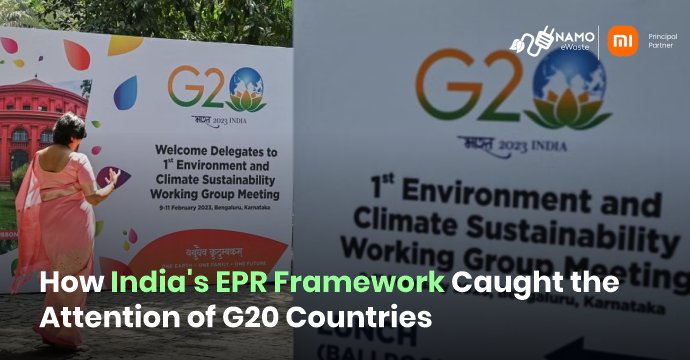
India’s Extended Producer Responsibility (EPR) framework has gained significant attention from G20 countries due to its innovative approach to addressing the challenges of plastic waste and promoting a circular economy. The recent deliberations at the G20 Environment and Climate Sustainability Working Group Meeting in Gandhinagar highlighted the importance of global cooperation for an integrated circular economy[1]. Here’s a closer look at how India’s EPR framework has become a model for other countries and the key factors that have contributed to its success. Addressing the Challenges of Plastic Waste Generation The G20 discussions have emphasised the need for effective strategies to tackle the increasing generation of plastic waste. India’s EPR framework has been recognized as a comprehensive approach that holds producers responsible for the entire lifecycle of their products, including post-consumer waste management[1]. This approach ensures that the burden of managing plastic waste is shared among all stakeholders, leading to more sustainable and efficient waste management systems. “The circular economy is about resource efficiency that can improve our products and services but also ensure that there is minimal environmental impact while extracting the materials. Reusing, recycling and restoring are the best ways to continue our economic activity. The EPR framework presented explained the producer’s responsibility in creating a circular economy to which the G20 countries expressed great interest and were discussed in detail,” – Leela Nandan, Secretary Ministry, Environment, Forest and Climate Change. Key Achievements of India’s EPR Framework Electronic Waste Management: India’s EPR in waste management framework has led to a significant reduction in electronic waste ending up in landfills. Producers are now actively involved in collecting, dismantling, and recycling electronic products, ensuring the responsible disposal of hazardous materials. Plastic Waste Reduction: The extension of EPR to plastic products has contributed to a substantial decrease in plastic waste littering the environment. Producers have been incentivized to design products with recyclability in mind, leading to the development of eco-friendly packaging solutions. Boosting Circular Economy: India’s EPR framework has played a pivotal role in promoting a circular economy. The concept of product stewardship has encouraged manufacturers to design products with durability, repairability, and recyclability, reducing the overall environmental footprint. Integration of the 9Rs Principles To ensure the global applicability of the framework, the G20 has explored the integration of innovative concepts such as the 9Rs (Reduce, Reuse, Recycle, Recover, Redesign, Remanufacture, Repair, Refurbish, and Rethink). India’s EPR framework has already incorporated these principles, making it a valuable model for other countries looking to enhance their waste management strategies. Establishment of a G20 Resource Efficiency and Circular Economy Industry Coalition (RECEIC) The G20 has proposed the establishment of a Resource Efficiency and Circular Economy Industry Coalition (RECEIC) to facilitate international collaboration and knowledge sharing on circular economy initiatives. India’s EPR framework can serve as a blueprint for the RECEIC, showcasing the benefits of a comprehensive and inclusive approach to waste management. Engagement with Informal and Regional Platforms While several informal and regional platforms, such as the Platform to Accelerate a Circular Economy (PACE), already exist, the G20 has recognized the need for a formal mechanism dedicated to addressing the challenges posed by plastics. India’s participation in these platforms, along with its successful implementation of the EPR framework, positions the country as a key player in global efforts to combat plastic waste[1]. Fostering Partnerships: Government, Industry, and Civil Society Unite The success of India’s EPR framework can be attributed to the active participation of various stakeholders, including government officials, industry experts, and environmentalists. This multi-sectoral collaboration has helped in the development of a robust and effective waste management system, which can serve as a model for other countries seeking to enhance their sustainability efforts. Key Takeaways from the Presidency Document Multi-Stakeholder Collaboration: India emphasizes the importance of involving all stakeholders, including producers, consumers, recyclers, and regulatory bodies, in the EPR process. Collaboration is key to the success of any EPR framework. Innovation in Recycling Technologies: India highlights the need for innovation in recycling technologies to efficiently manage electronic and plastic waste. Investments in research and development have led to the development of state-of-the-art recycling facilities. Consumer Awareness: Educating consumers about the importance of responsible product disposal is a cornerstone of India’s EPR success. Awareness campaigns have been instrumental in changing consumer behavior. Transparency and Accountability: India’s EPR framework places a strong emphasis on transparency and accountability. Producers are required to report on their collection and recycling efforts regularly, ensuring a high level of accountability. India’s EPR framework has emerged as a leading example of how innovative policies and collaborative approaches can address the challenges of plastic waste and promote a circular economy. As G20 countries continue to work towards a more sustainable future, India’s experiences and best practices in EPR implementation will play a crucial role in shaping global strategies for waste management and resource efficiency. References: https://www.g20.org/content/dam/gtwenty/gtwenty_new/document/G20_ECSWG-Extended_Producer_Responsibility_for_Circular_Economy.pdf Citations: [1] https://t20ind.org/research/creating-a-g20-plastic-waste-response-framework-for-sustainable-consumption/
Ways to Reduce the Carbon Footprint of Laptops Through Proper IT Asset Disposal?
In today’s digital age, laptops have become an indispensable part of our lives. However, the production, use, and disposal of laptops contribute to carbon emissions and environmental degradation. To combat this issue, it is crucial for organisations and individuals to take proactive steps towards reducing the carbon footprint of laptops. One effective way to achieve this is through proper IT asset disposal. In this blog, we will explore several practical ways to reduce the carbon footprint associated with laptops and highlight the role of Namo eWaste Management Ltd. in implementing sustainable solutions. Extend the Lifespan of Laptops: One of the simplest and most effective ways to reduce the carbon footprint of laptops is by extending their lifespan. By properly maintaining and repairing laptops, organisations can maximise their usage before considering an upgrade or disposal. This approach reduces the demand for new laptops, thereby reducing carbon emissions associated with manufacturing and transportation. Implement Laptop Recycling Programs: Organisations should establish structured laptop recycling programs to ensure responsible disposal. Instead of throwing away old laptops, recycling allows for the recovery of valuable materials, reducing the need for raw resource extraction. Namo eWaste Management Ltd. offers comprehensive laptop recycling services, adhering to strict environmental regulations and certifications. By partnering with Namo eWaste, organisations can contribute to reducing their carbon footprint through proper IT asset disposal. Choose Energy-Efficient Laptops: When purchasing new laptops, opt for energy-efficient models that have earned energy certifications such as ENERGY STAR. These laptops are designed to consume less energy during operation, leading to reduced carbon emissions over their lifespan. Energy-efficient laptops not only save money on electricity bills but also help mitigate the environmental impact of laptop usage. Promote Remote Work and Virtual Meetings: Encouraging remote work and virtual meetings can significantly reduce the carbon footprint associated with laptop usage. By minimising the need for employees to commute, organisations can reduce transportation-related emissions. Virtual meetings also eliminate the need for travel, further reducing carbon emissions. Embracing remote work practices not only benefits the environment but also enhances work-life balance and productivity. Proper Disposal of Batteries: Laptop batteries contain hazardous materials that can harm the environment if not disposed of properly. Implementing battery recycling programs ensures the safe and responsible disposal of laptop batteries. Namo eWaste Management Ltd. specialises in the handling and disposal of hazardous materials, providing a reliable solution for organisations to dispose of laptop batteries in an environmentally friendly manner. Key Takeaways: Reducing the carbon footprint of laptops through proper IT asset disposal is a vital step towards a sustainable future. By extending the lifespan of laptops, implementing recycling programs, choosing energy-efficient models, promoting remote work, and properly disposing of batteries, organisations can make a significant impact on carbon emissions. Namo eWaste Management Ltd. emerges as a trusted partner in achieving these goals. With their expertise in responsible e-waste recycling, including laptops, Namo eWaste ensures that valuable resources are recovered and hazardous materials are handled safely. By collaborating with Namo eWaste, organisations can effectively reduce their carbon footprint and contribute to a greener and healthier planet. Choose Namo eWaste as your partner in reducing the carbon footprint of laptops through proper IT asset disposal. Together, we can make a tangible difference and work towards a more sustainable future!🌿
Comprehensive Guide to Reverse Logistics & Why Is It Important?

The process of managing the flow of goods and materials from the end consumer back to the point of origin is called reverse logistics. This process is also known as aftermarket supply chain management or reverse supply chain. The goal of reverse logistics is to optimise the value of returned products while minimising waste and environmental impact. In this blog, we will discuss the importance of reverse logistics and its benefits for organisations. Reverse Logistics Management Reverse logistics management involves the coordination of activities related to the reverse flow of goods, from customer returns to the point of origin. This includes activities such as product returns, refurbishment, repair, and recycling. Effective reverse logistics management can reduce costs, increase customer satisfaction, and improve sustainability. Importance of Reverse Logistics Reverse logistics is becoming increasingly important in today’s economy for several reasons. Firstly, it is an effective way to reduce waste and minimise the environmental impact of discarded products. By reusing and recycling materials, organisations can reduce their carbon footprint and contribute to a greener future. Secondly, reverse logistics can help organisations reduce costs and increase efficiency. By optimising the flow of returned products, organisations can minimise waste and improve the recovery of value from products that would otherwise be discarded. This can help organisations to improve their bottom line and reinvest the savings into other areas of the business. Thirdly, reverse logistics can improve customer satisfaction. By providing a convenient and efficient returns process, organisations can build trust with customers and improve their overall experience. This can lead to increased customer loyalty and repeat business. There are several benefits of reverse logistics strategy for organisations. These include: Cost Savings: By recovering value from returned products, organisations can reduce the costs associated with waste disposal and inventory management. Improved Sustainability: By reusing and recycling materials, organisations can reduce their environmental impact and contribute to a greener future. Improved Customer Satisfaction: By providing a convenient and efficient returns process, organisations can improve customer satisfaction and build trust with customers. Increased Efficiency: By optimising the flow of returned products, organisations can minimise waste and improve the recovery of value from products that would otherwise be discarded. Reverse Supply Chain The reverse supply chain is the network of activities involved in the reverse flow of goods, from customer returns to the point of origin. This includes activities such as product returns, refurbishment, repair, and recycling. The reverse supply chain is an important component of the overall supply chain, and effective management of the reverse supply chain can improve efficiency, reduce costs, and improve sustainability. Key Takeaways In conclusion, reverse logistics is an important aspect of supply chain management that involves the coordination of activities related to the reverse flow of goods, from customer returns to the point of origin. Effective reverse logistics management can reduce costs, improve sustainability, and increase customer satisfaction. By optimising the flow of returned products, organisations can minimise waste and improve the recovery of value from products that would otherwise be discarded. Organisations that implement a reverse logistics strategy can enjoy the benefits of cost savings, improved sustainability, improved customer satisfaction, and increased efficiency. Namo eWaste Management Ltd. is one of the leading companies in India that specialises in the responsible recycling of electronic waste, including the management of reverse logistics. If your organisation is looking to implement a reverse logistics strategy for the management of electronic waste, we can provide comprehensive and sustainable solutions. With our experience in managing large volumes of high-quality EEE waste and their ISO and r2 certifications, you can trust Namo eWaste to handle your electronic waste in an environmentally safe and responsible manner. Contact us today to learn more about their services and how they can help your organisation implement an effective reverse logistics strategy for electronic waste management.
How to Securely Dispose of IT and Media Assets

As our dependence on technology continues to grow, so does the amount of electronic waste we generate. From old laptops to outdated media devices, disposing of IT and media assets can be a challenge, especially when it comes to ensuring the security of sensitive data. At Namo eWaste, we are committed to ensuring that electronic waste is disposed of in a safe, secure, and environmentally friendly way. In this blog, we’ll explore some of the best practices for securely disposing of IT and media assets, and explain how Namo eWaste can help. IT and Media Assets: Tips to Dispose Securely disposing of IT and media assets is crucial to protecting your sensitive data and reducing electronic waste. By following these best practices, you can ensure that your old devices are properly disposed of and your data stays secure. Consider hiring a professional IT asset disposal service to handle the disposal process for you, and make sure to document the process for future reference. With these steps, you can dispose of your old IT and media assets with confidence, knowing that you’re doing your part to protect your data and the environment. Here are some tips on how to securely dispose of IT equipment and Media Assets: Backup your data Before disposing of any IT equipment or media assets, it’s important to back up any important data you may have stored on them. This includes files, photos, and any other data that could be compromised if the device falls into the wrong hands. Make sure to transfer all of this data to a secure location, such as an external hard drive or cloud storage service, before proceeding with the disposal. Erase your data Once you’ve backed up your data, the next step is to securely erase all of the data from the device. This can be done using a variety of methods, including overwriting the data multiple times, using specialised software, or physically destroying the device. If you’re not sure how to securely erase your data, consider hiring a professional IT asset disposal service to handle this step for you. Consider IT equipment recycling Recycling IT equipment is not only environmentally friendly, but it can also help ensure that your data stays secure. When you recycle your old IT equipment, the recycling company will dismantle the device and securely dispose of any data storage components. They will also recycle any usable parts, reducing the amount of electronic waste that ends up in landfills. Properly dispose of media assets Media assets, such as CDs, DVDs, and flash drives, can also contain sensitive data that needs to be securely disposed of. Shredding, crushing, or degaussing the media can all be effective ways to ensure that the data is irretrievable. Again, consider hiring a professional asset disposal service to handle the disposal of your media assets. Document the disposal process Finally, it’s important to document the disposal process to ensure that you can provide evidence of proper disposal in case of any audits or legal requirements. Keep a record of the disposal process, including the date and method of disposal, as well as any certificates or other documentation provided by the disposal company. Why Namo eWaste for recycling IT assets? At Namo eWaste, we believe that secure and environmentally friendly disposal of IT and media assets is a responsibility that we all share. Our team is committed to providing safe and efficient disposal solutions that meet the highest standards of data security and environmental sustainability. By choosing Namo eWaste, you can rest assured that your electronic waste is being disposed of in a secure, eco-friendly, and socially responsible manner. Join us in the fight against electronic waste and choose Namo eWaste for all your electronic waste disposal needs. Together, we can make a difference!
Positive Impact of The Circular Economic Model on Climate Change
As the world continues to face the challenge of climate change, it is clear that we need to shift our current economic model to a more sustainable one. The Circular Economic Model is one such model that is gaining traction around the world for its ability to reduce waste, conserve resources and reduce greenhouse gas emissions. In this blog, we will explore the benefits of the Circular Economic Model and its positive impact on climate change. The Need for a Sustainable Economic Model The world is facing an unprecedented challenge in the form of climate change. The increasing concentration of greenhouse gases in the atmosphere is causing temperatures to rise, leading to more frequent and severe weather events, rising sea levels, and damage to ecosystems. One of the main drivers of climate change is our current economic model, which relies on a linear approach to resource use. In this model, resources are extracted, processed, and disposed of at the end of their useful life. This approach leads to waste, pollution, and the depletion of natural resources. To address the challenges of climate change, there is a growing need for a sustainable economic model. One such model is the Circular Economic Model. This model aims to keep resources in use for as long as possible, extracting the maximum Circular Economic Model: What is it? The Circular Economic Model is an economic model that aims to keep resources in use for as long as possible, extracting the maximum value from them before ultimately recovering and regenerating them. The circular model of economy differs from the traditional linear model, which takes a ‘take, make, dispose’ approach to resources. In contrast, the circular economic model is designed to be restorative and regenerative by design. Circular Economy: Benefits There are many benefits of circular economy but these few are the most important: Resource Conservation: The Circular Economic Model focuses on reducing waste by keeping resources in use for as long as possible. This reduces the need for new resources and therefore reduces the number of natural resources extracted from the environment. Lower Greenhouse Gas Emissions: The Circular Economic Model has the potential to reduce greenhouse gas emissions by reducing waste, promoting energy efficiency and encouraging the use of renewable energy sources. New Business Opportunities: The Circular Economic Model offers new business opportunities for companies that can create innovative products and services that fit within this model. By creating value from waste, companies can generate revenue while reducing their environmental impact. Job Creation: The Circular Economic Model has the potential to create jobs in areas such as recycling, remanufacturing, and repairing. These jobs are typically local and can help stimulate local economies. The Impact of Circular Economy:Climate Change The impact of the Circular Economic Model on climate change is significant. By reducing waste and greenhouse gas emissions, the Circular Economic Model can help to mitigate the impacts of climate change. For example, the use of renewable energy sources, such as wind and solar power, can help to reduce the amount of greenhouse gases emitted by the energy sector. Additionally, the Circular Economic Model can help to reduce emissions in the manufacturing sector. By promoting the use of recycled materials and remanufacturing, the amount of energy needed to produce new products can be reduced. This leads to a reduction in greenhouse gas emissions and a more sustainable production process. Ending Note… The Circular Economic Model offers a positive solution to the challenges we face with climate change. By reducing waste, conserving resources, promoting energy efficiency and creating new business opportunities, this model has the potential to create a more sustainable future for us all. As we continue to face the challenges of climate change, it is clear that the Circular Economic Model has a vital role to play in creating a more sustainable future for our planet. Circular economy is not just a concept, but a real-world solution that can benefit our planet and future generations. NAMO, as an e-waste recycling company, is committed to contributing to the circular economy model. By recovering valuable resources from electronic waste, we reduce the need for extracting new materials, conserve natural resources, and promote a sustainable production process. Our efforts not only help in waste reduction but also generate new job opportunities and promote a sustainable business model. By creating a closed-loop system for electronic waste, NAMO aims to create a more sustainable future, in line with the principles of the Circular Economic Model.